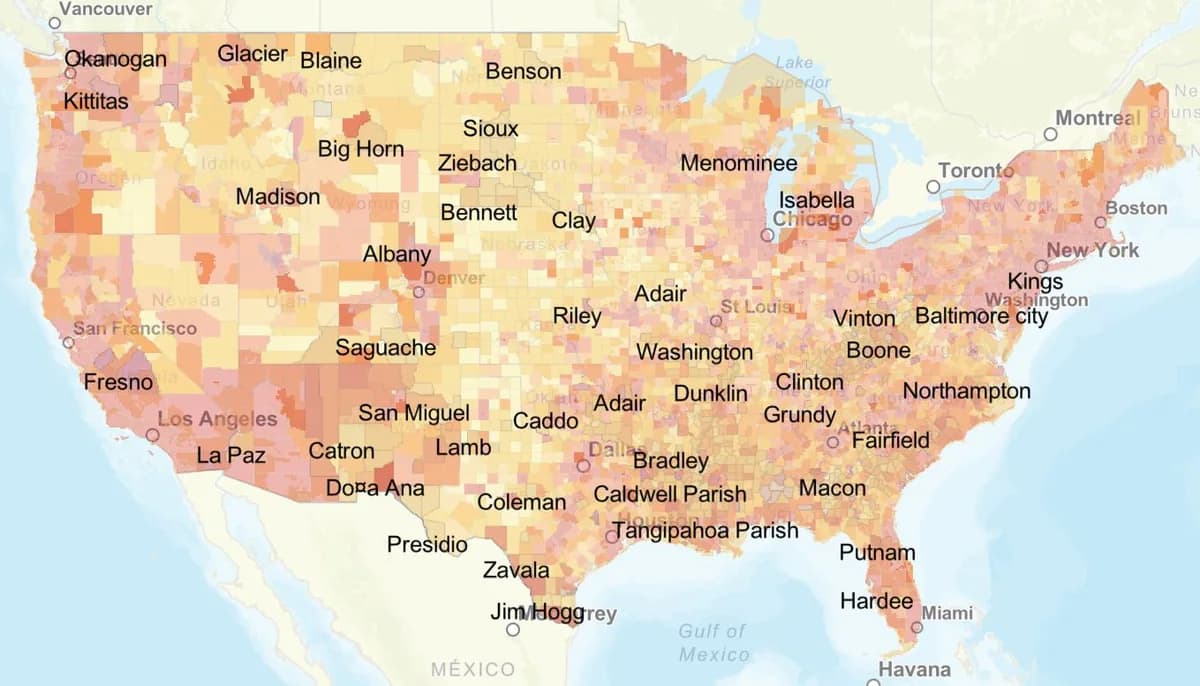
If you're exploring a J-1 waiver through the Conrad 30 program or through HHS, you've almost certainly encountered the acronyms HPSA and MUA. These federally designated shortage area classifications are not just bureaucratic labels — for many waiver programs, they are a prerequisite. Understanding what they mean, how they are scored, and how to verify a practice site's designation is essential for any IMG physician planning a waiver-based career path.
What Is a Health Professional Shortage Area (HPSA)?
A Health Professional Shortage Area (HPSA) is a geographic area, population group, or specific facility that the Health Resources and Services Administration (HRSA) has determined has an insufficient supply of health professionals relative to the needs of the population. HRSA designates three distinct types of HPSAs:
- Primary Care HPSA: Shortage of primary care providers. The general benchmark is a population-to-provider ratio of 3,500:1 or higher (3,000:1 for areas with elevated need indicators such as high poverty rates or infant mortality).
- Dental HPSA: Shortage of dental care providers.
- Mental Health HPSA: Shortage of mental health providers, including psychiatrists.
For physician J-1 waiver purposes, Primary Care and Mental Health HPSAs are the most relevant. Each is scored on a scale of 0–25 (Primary Care) or 0–26 (Mental Health), with higher scores indicating more severe need. The HHS J-1 waiver program, for example, requires a Primary Care HPSA score of 7 or higher — meaning mid-to-high severity shortage areas only.
HPSA Scoring: What the Number Means
HPSA scores are calculated using several weighted factors, including:
- Population-to-provider ratio
- Percentage of the population below 100% of the federal poverty level
- Percentage of the population that is elderly (age 65+)
- Infant mortality rate
- Travel time to the nearest source of care outside the HPSA
A score of 25 represents the most severe shortage. Primary care HPSA scores are also used to determine Medicare bonus payments — physicians working in HPSAs with scores of 14 or higher receive a 10% bonus on Medicare fee-for-service payments. This is an additional financial benefit for physicians choosing a waiver position.
What Is a Medically Underserved Area (MUA)?
A Medically Underserved Area (MUA) is designated using HRSA's Index of Medical Underservice (IMU), a composite score derived from four variables:
- Ratio of primary medical care physicians per 1,000 population
- Infant mortality rate
- Percentage of the population below the poverty level
- Percentage of the population age 65 or older
An IMU score of 62.0 or below qualifies an area for MUA designation. Unlike HPSAs (which focus specifically on healthcare provider supply), MUAs reflect broader community health access challenges. An area can be both HPSA-designated and MUA-designated, or just one of the two.
A related category, Medically Underserved Population (MUP), applies the same IMU methodology to specific subpopulations — such as low-income patients or migrant farmworkers — within a service area rather than the area's entire population.
MUA vs. HPSA: Which Matters for J-1 Waivers?
The Conrad 30 program requires your practice site to be in either a HPSA or an MUA/MUP. That “or” is significant — if a location lacks a HPSA designation, an MUA designation may still qualify the site. Always verify bothdesignations for any practice site you're considering.
The HHS IGA program is more restrictive: it requires a Primary Care HPSA with a score of 7 or higher, and does not accept MUA-only designations as a substitute. The ARC, DRA, SCRC, and NBRC programs generally follow HRSA HPSA designations as their primary criterion.
HPSA Proposed Withdrawal: What It Means
HRSA periodically reviews and updates its shortage area designations. When a previously designated HPSA no longer meets the criteria — typically because new providers have moved into the area — HRSA may issue a Proposed Withdrawal notice. During the review period, the HPSA is still technically designated, but it is flagged for potential removal at the next update cycle.
On VisaMD, job listings in a Proposed Withdrawal HPSA display a modified badge — visually distinct and less prominent than a fully designated HPSA — to alert you that the designation may not persist. If you are pursuing a Conrad 30 waiver based on a Proposed Withdrawal HPSA, confirm the designation remains active before your state health department submits the recommendation.
How to Look Up Any Practice Location
HRSA maintains a publicly accessible data portal where you can search any address, county, or facility and view its current shortage area designations:
data.hrsa.gov — Health Workforce Shortage Areas ↗
You can search by address, map view, or HPSA/MUA ID number. The result will show the designation type (Primary Care, Dental, Mental Health), the score, the geographic boundary, and the designation status. This is the authoritative source — always verify here rather than relying solely on an employer's representation.
HPSA and MUA Badges on VisaMD
Every job listing on VisaMD that is geocoded to a HPSA or MUA location is automatically tagged with the relevant badge. The teal HPSA badge means the job is located in a federally designated Primary Care, Dental, or Mental Health HPSA — a strong signal of Conrad 30 and IGA waiver eligibility. The MUA badge provides similar context for MUA-designated areas.
Use the HPSA filter on any specialty results page to narrow your search to shortage-area positions only. Combined with the J-1 visa filter, you can identify Conrad 30-eligible positions in your specialty and target state within seconds.
Disclaimer: This article is for informational purposes only and does not constitute legal advice. HPSA and MUA designations change periodically — always verify current status with HRSA. Consult a qualified immigration attorney for advice specific to your situation.