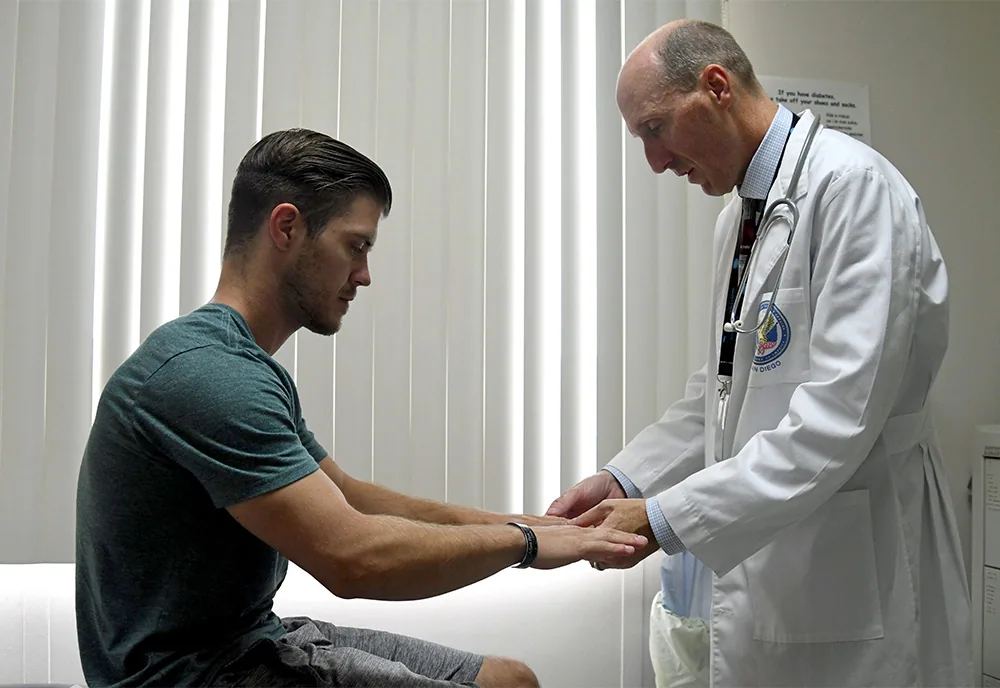
Most J-1 physician waiver programs require you to practice in a federally designated shortage area — an HPSA or MUA — as the primary condition for obtaining a recommendation. The Department of Veterans Affairs (VA) is a notable exception. Under the VA's J-1 waiver program, the qualifying criterion is not geography but mission: the physician must commit to serving America's veterans at a VA facility, and the facility must demonstrate it needs that physician to maintain its programs.
The VA waiver is also one of the only physician waiver programs with no specialty restriction. Whether you are a primary care physician, a neurologist, a cardiologist, a urologist, or a radiologist, the VA can sponsor your J-1 waiver — provided the right position exists and the facility demonstrates need.
What the VA Waiver Requires
The VA sponsors J-1 waivers pursuant to VHA Directive 5005.01 and the Exchange Visitor Program authority under the Immigration and Nationality Act. The core requirements are:
- Three-year full-time employment contract at a VA medical facility in a clinical (direct patient care) position.
- Disruption to VA programs:The sponsoring VA facility must demonstrate that losing the exchange visitor's services would disrupt an established VA program or significantly impact patient care.
- Documented recruitment failure: The VA facility must show it conducted comprehensive recruitment — not initiated specifically to justify the waiver — and failed to identify a qualified US citizen or lawful permanent resident physician willing to accept the position at comparable compensation.
- Begin employment within 90 daysof the State Department's waiver approval.
Key Advantages of the VA Waiver
No HPSA or MUA Requirement
Unlike Conrad 30, HHS, ARC, DRA, SCRC, and NBRC — all of which require the practice site to be in a federally designated shortage area — the VA waiver has no geographic restriction tied to HPSA or MUA status. A VA facility in a major urban area with a full complement of local physicians can still sponsor a J-1 waiver if it meets the disruption and recruitment criteria.
All Medical Specialties Eligible
The VA's physician workforce includes virtually every specialty. Subspecialists who are ineligible for HHS (which only accepts primary care and psychiatry) and who don't fall within a regional IGA's geographic footprint often find the VA to be the most practical waiver option.
Competitive Government Employment Package
VA physicians are federal employees. The compensation package includes a competitive salary under Title 38 pay schedules, the Federal Employees Health Benefits program, the Federal Employees Retirement System or equivalent, malpractice coverage through the Federal Tort Claims Act (no separate malpractice insurance required), and paid federal holidays and leave. For a physician new to the US workforce, this package provides stability and comprehensive benefits from day one.
No Annual Slot Cap
Unlike Conrad 30 (30 slots per state per year), the VA operates no cap on J-1 waiver recommendations. Each recommendation is evaluated on its individual merits.
The Application Process
- Identify a VA position. Search for open physician positions on the USAJOBS.gov website. Many VA facilities actively recruit international physicians and will indicate J-1 waiver sponsorship availability in the job posting or during recruitment.
- Complete the VA credentialing and privileging process. VA facilities have their own credentialing requirements, which must be satisfied before employment begins. This includes verification of medical school degree, post-graduate training, board certification (where applicable), and licensure.
- VA facility submits the waiver package.The sponsoring VA facility's Human Resources and legal counsel prepare and submit the J-1 waiver request to VA Central Office, which then forwards it to the US Department of State.
- State Department review and approval. The State Department Waiver Review Division makes the final determination. VA waivers typically take 6 to 8 months from the time the complete package is submitted — longer than Conrad 30 (4–6 weeks) or HHS (6–8 weeks). Start the process early.
- Begin employment. Upon approval, the physician must begin at the VA facility within 90 days.
Work Authorization During the Waiver Period
VA physicians on J-1 waiver commitments typically work under H-1B status during the three-year service period, since J-1 status usually expires before the three years are complete. Because VA facilities are government organizations, they are cap-exempt employers — the H-1B petition can be filed at any time without lottery exposure.
After Three Years
Once you complete the three-year VA service obligation, the Conrad 30-style geographic and employer restrictions are lifted. You can:
- Continue VA employment indefinitely under H-1B or pursue permanent federal employment.
- Transition to private practice, academic medicine, or any other employer in the US.
- Apply for a green card — your employer can initiate an immigrant petition during the service period.
VA physicians who have served in shortage or rural VA facilities may also be well-positioned for an EB-2 National Interest Waiver based on their documented public health service contribution.
Is the VA Right for You?
The VA waiver is the strongest option for subspecialists with no geographic tie to an ARC, DRA, SCRC, or NBRC region, or for physicians who want to avoid HPSA requirements entirely. It is also a compelling choice for physicians who genuinely want to serve the veteran population — one of the US's most medically complex and underserved demographics.
The 6–8 month processing timeline is the primary trade-off. If you are approaching the end of your J-1 status and need a quick decision, Conrad 30 or HHS may be more practical. If you have adequate lead time, the VA pathway offers breadth and flexibility that few other programs match.
Disclaimer: This article is for informational purposes only and does not constitute legal advice. VA waiver requirements are governed by internal VA policy (VHA Directive 5005.01) and federal immigration law, both of which may change. Consult a qualified immigration attorney for guidance specific to your situation.